Friday, March 5, 2010

Does this always have to be about power and control? A RIGHT to choice.


NARAL Pro-Choice America:
Sign Our Letter to Pro-Choice House Leaders

Health-care legislation is back in the spotlight, and anti-choice Rep. Bart Stupak (D-Mich.), Sen. Ben Nelson (D-Neb.), and right-wing groups are unrelenting in their push to restrict women’s abortion coverage. In fact, in an interview with “Good Morning America,” Rep. Stupak said he would bring down the entire bill unless there is a complete abortion-coverage ban in the new health system.

The House passed Rep. Stupak's ban back in November, and our congressional champions have been fighting back ever since.

Our strongest pro-choice allies in Congress need to hear from you now. Add your name to our letter before our midnight deadline on Sunday to give our leaders an even stronger national voice for the fight in the coming days.


Letter to Pro-Choice Congressional Leaders:

We support women's reproductive rights in health-care reform

To Pro-Choice Leaders in Congress:

As pro-choice Americans, we believe that health-reform legislation will improve the lives of millions of women and families. However, the current bill contains abortion-coverage restrictions that could cause millions of women who have coverage for abortion now to lose it. This proposal must be fixed to ensure that women will not give up ground in the new system.

We recognize your unwavering support of a woman's right to choose, and stand by you in your efforts to make significant improvements to the bill so that we can finally advance health-care reform without sacrificing women's rights.

Signed by,
[Your Name]
[Your Address]
[City, State ZIP]


The WP: Obama close to reversing Holder on civilian trials

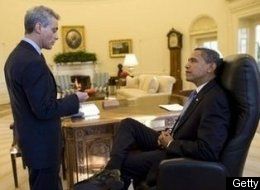
One of the very few commendable steps taken by the Obama administration toward reversing the Bush/Cheney Constitution/Terrorism template was the DOJ's decision to try the five accused 9/11 defendants in a civilian court (just as the rest of the civilized world does with Terrorists).  But ever since that was announced, Obama officials have been clearly signaling that they intend to reverse that decision in response to the GOP's political attacks (while Rahm Emanuel has been busy making clear he disagreed with Holder's choice), and a new story in The Washington Post this morning provides the clearest evidence yet that this will happen.  The article reports that "President Obama's advisers are nearing a recommendation that Khalid Sheik Mohammed, the self-proclaimed mastermind of the Sept. 11, 2001, attacks, be prosecuted in a military tribunal . . . a step that would reverse Attorney General Eric H. Holder Jr.'s plan to try him in civilian court."  This reversal will be due to "demands, mainly from Republicans, that Mohammed and his accused co-conspirators remain under military jurisdiction."


I obviously don't know whether this will in fact happen, but because these signals have come both from Eric Holder on the record and what are clearly coordinated, authorized anonymous White House "leaks," it seems quite likely.  Without assuming that this is a fait accompli, I want to make several points about what it would mean if Obama does reverse Holder's decision and puts the five 9/11 defendants before a military commission:
First, although they will try, it will be extremely difficult even for his most devoted loyalists to deny the fundamental cowardice of Barack Obama.  Think about how many times this will have happened:
During the primary campaign, Obama unequivocally vowed to filibuster any FISA bill that contained telecom immunity, only to turn around -- once the nomination was secure -- and vote against a Democratic filibuster of such a bill, and then in favor of the underlying bill itself; in other words, he blatantly violated his own unequivocal vow in order to avoid being called Soft on Terror (but did so assuring his believing supporters that, once in office, he'd fix the surveilllance excesses he helped enact; don't hold your breath waiting for that to happen).  Then, last May, Obama announced that he would comply with two court decisions by releasing photographs of detainee abuses in the Pentagon's custody, only to turn around two weeks later and completely reverse himself after Liz Cheney and friends accused him of Endangering the Troops and Helping Terrorists.  If, in the face of "GOP demands" that Mohamed be denied a civilian trial, he again reverses himself -- this time on the highest-profile civil liberties decision of his administration -- he will unmistakably reveal himself, even to his most enamored admirers, as someone so utterly devoid not only of principle but also of resolve:  you just blow on him a little and he falls down and shatters into little pieces.
Even just as a political matter, is there any better way to ensure that Americans will view him as weak than by abandoning one key decision after the next as a result of the slightest pressure?  What kind of person could possibly admire a "leader" who does this?
Second, Obama supporters spent months vigorously defending the decision to try KSM in a civilian court on the ground that Obama was upholding the Constitution and defending the rule of law.  What are they going to say if he reverses himself and uses military commissions instead:  that he's shredding the Constitution and trampling on the rule of law?  If they have any intellectual integrity at all, that's what they will have to say.   The reality is that this praise for Obama never made any sense -- how can one claim that civilian trials are compelled by "our values" and "the rule of law" and praise Obama for following those principles when he's simultaneously denying civilian trials to most detainees? -- but since that's the argument they made to defend him, they should follow that through to its logical conclusion if he reverses Holder's decision.  Here's the only way an intellectually honest person could react to such a decision, from the Post article:

Marine Col. Jeffrey Colwell, acting chief defense counsel at the Defense Department's Office of Military Commissions, said it would be a "sad day for the rule of law" if Obama decides not to proceed with a federal trial. "I thought the decision where to put people on trial -- whether federal court or military commissions -- was based on what was right, not what is politically advantageous," Colwell said.
I thought so, too.  Of course, many hardened Obama supporters amazingly found ways to justify both his original position and his 180-degree reversals on FISA and detainee photos (pragmatism!!), but how can anyone with a working brain or a mirror possibly venerate civilian trials as compelled by the Constitution and the Rule of Law, and then refrain from harshly criticizing Obama for denying those very same civilian trials?
Third, remember all the loud, righteous Democratic complaints about how Alberto Gonzales had "politicized" the DOJ and allowed the White House to intervene for political reasons in prosecutorial decisions?  That's exactly what this would be.  They're not even trying to hide the fact that it is the White House that will intervene and reverse the prosecution decision of the Attorney General and his career prosecutors for purely political reasons.  There are no words in the English language sufficient to describe the intellectual dishonesty and hypocrisy of those who objected to Alberto Gonzales and Karl Rove's "politicization" of the DOJ yet who would refuse to voice the same complaints here.  And that's to say nothing of the glaring hypocrisy of Democrats' having spent years railing against military commissions generally, only now to turn around and embrace them.
Finally, the political excuse being offered -- that this will help secure votes to fund the closing of Guantanamo -- makes absolutely no sense for several reasons (aside from the fact that it borders on corruption to override the DOJ's decisions about prosecutions based on political horse-trading).  As The Post article makes clear, the objections to trying these defendants in a civilian court comes "mainly from Republicans," who only have 41 seats in the Senate.  If Republicans want to de-fund the closing of Guantanamo, it will be the GOP -- not the Obama White House -- which will need 60 votes to overcome a filibuster in order to enact that ban (just as Democrats needed 60 votes when they tried to impose limits on the funding of the Iraq War).  Funding decisions themselves are not subject to filibuster and require only 50 votes to pass.
The prior decision of the Senate not to fund the closing of that camp was due to the fact that Obama had not yet revealed his plan for closing it, and Senators -- understandably -- did not want to fund something that had not yet even been disclosed.  Now that Obama has announced his plan for its closing, very few Democrats have expressed opposition to it or to civilian courts.  The claim that reversing Holder's decision will help close Guantanamo is pure fiction.  And even if it were true, it raises the question nobody can answer:  what is the point of closing Guantanamo if the core Bush/Cheney/Rumsfeld system -- military commissions for some and indefinite detention for the rest -- is retained in full by Obama?
For years, Democrats have failed to grasp the fact that they are perceived as "weak" not because of any specific policies, but because they are perceived -- rightly -- to believe in nothing (or at least nothing that they claim to believe).  It is hard to imagine any act that could more strongly bolster that perception than to watch Barack Obama -- yet again -- scamper away from his own claimed principles all because the GOP is saying some mean things about him.


ICC at a glance


The International Criminal Court (ICC) is an independent, permanent court that tries persons accused of the most serious crimes of international concern, namely genocide, crimes against humanity and war crimes. The ICC is based on a treaty, joined by 110 countries.
The ICC is a court of last resort. It will not act if a case is investigated or prosecuted by a national judicial system unless the national proceedings are not genuine, for example if formal proceedings were undertaken solely to shield a person from criminal responsibility. In addition, the ICC only tries those accused of the gravest crimes.
In all of its activities, the ICC observes the highest standards of fairness and due process. The jurisdiction and functioning of the ICC are governed by the Rome Statute.

Frequently Asked Questions

Thursday, March 4, 2010


They [terrorists] can’t claim that their suicide bombings are martyrdom operations and that they become the heroes of the Muslim Umma [global brotherhood]. No, they become heroes of hellfire, and they are leading towards hellfire. There is no place for any martyrdom and their act is never, ever to be considered jihad.
- Dr. Tahir ul-Qadri, a London-based Pakistani Muslim scholar in a fatwa (religious ruling) against terrorism and suicide bombing. Ul-Qadri is head of the Minhaj ul-Quran religious and educational organization, founded in Pakistan in 1980 to promote peace and interfaith dialogue around the globe. (Source: Al Jazeera)


While the opportunity to bring democracy to the Middle East as a bulwark against Islamic extremism "justified the decision to remove Saddam Hussein," Mr. Rove says the suspected weapons were the primary justification for war.
Change will not come if we wait for some other person or some other time. We are the ones we've been waiting for. We are the change that we seek.
Barack Obama


Aging boomers face stark economics - CNBC TV

MSN Tracking Image
  MSNBC.com
Aging boomers face stark economics
Declining finances, rising health care costs threaten a generation
CNBC
updated 12:12 p.m. CT, Thurs., March. 4, 2010
Not so long ago, Michael Blattman lived in the upscale Washington, D.C., suburb of Potomac, Md., earning $225,000 a year as senior vice president for a student loan company. As he reached his 50s, it never really occurred to him that his job wouldn’t last forever.
“To be perfectly honest, I didn’t really go there,” he said. “Yeah, there was always a risk. Everything in business is a risk.”
In January 2008, Blattman, along with 500 other employees, was laid off by his company. With an $188,000 severance, he wasn’t worried at first.
“The barometer was always something like five or six months until you landed something comparable,” he said. “So I figured, ‘Oh, OK, six months?’ OK, I could do this for six months.  And find the next one. Well, there was no next one.”
As his generation confronted an economic storm of historic proportions, Blattman found himself humbled — and living in a one-room apartment. After applying for 600 openings and getting only three interviews, he was still looking after two years. 
His old boss recently gave him a stark assessment of his prospects.
“He said, ‘How’s it going?’” Blattman recalled. “I said, ‘Nobody’s talking to me.’  And he says ‘That’s because you’re an old white guy.’ And that stopped me in my tracks.”
Blattman gets some solace from the knowledge that he’s far from alone. More than 4 million baby boomers are unemployed, according to the Bureau of Labor Statistics. For many, retirement at 65 is no longer an option.
Facing shrinking nest eggs and mounting bills, they need to work, but they wonder if anyone will hire them again.
“The hardest thing each day is to get up and say, ‘OK, what am I going to do today?’ It’s a constant cheerleading effort every day. The thing is, I’m the cheerleader. And I am the team.  So I’m all in one.”
Blattman starts every day checking out online job sites and sending out resumes for jobs that pay much less than his old salary.
“I have applied for jobs that are one-fourth, one-third of my previous income level,” he said. “And I would have been thrilled to get it. There are just too many of me and everyone else out there. I just wish there was a place for us, to kind of land.”
All the want, the wishing, can lead to worry and to stress.
“People who are in this position can have heart attacks, could get strokes, because of the intense stress levels,” said Blattman.
For Blattman, the chronic stress has induced him to grind his teeth, which has led to several root canals, damaged his implants, and worn away his bank balance. When his health insurance expired in August, he was left with $13,000 in out-of-pocket expenses.
It’s a double whammy: no job and no health insurance. Many boomers are in far worse shape than Blattman. Some have turned to free clinics. It’s just one indication that the health care crisis is really an economic crisis.  And for the boomers it’s only going to get tougher, according to Harvard financial historian Niall Ferguson.
“If they’ve done their homework, then they’ll be afraid,” he said. “Very afraid.”
Ferguson says it won’t be easy to care for a generation with ailing bodies and many more years to live.
“The baby boomers have set us on a path towards a massive fiscal crisis,” he said. “Which is going to hit as the baby boomers retire.”
The recession, though devastating, will pass. But rising health care costs as boomers age may bring lasting harm to this generation’s financial well-being. By the time all boomers are 65, the senior population will have grown from 40 million now to about 72 million. Who will pay their medical bills?
“This thing is going to blow up,” said Ferguson, “because A: The number of retirees is about to zoom upwards just the way the number of teenagers once zoomed upwards in the ’50s, ’60s and ’70s; and B: Because the costs of these systems are completely out of control.”
The strain that the burden of caring for aging boomers will put on the health care system could overwhelm the economy.
If current trends continue, in 20 years almost a third of everything we spend on goods and services will be spent on medical care.
“The cost of health care for the elderly has been explosive,” said Ferguson. “And that is the crisis which seems to be the really big crisis lying ahead of us. We simply don’t have an answer as a society to the problem of a very large number of relatively unhealthy people who live into their 80s.”
Blattman and other boomers have woken up to a new reality. Their long-cherished belief that their lives would inevitably improve over time may no longer be true. It’s a cautionary tale for future generations.
“Never assume things will be better tomorrow than they are today,” he said. “It doesn’t mean you’re going to be worse off. Just don’t take things for granted and enjoy what you have.”
But he hasn’t given up hope. “Never,” he said.


The Jobs for Main Street Act of 2010, H.R. 2847

December 17, 2009
The House introduction of the anticipated “jobs package” provides states with sizeable infrastructure and potential job-saving initiatives to help weather the current economic lull.
The Jobs for Main Street Act of 2010 contains both emergency and non-emergency funding that is partly covered by savings from the Troubled Asset Relief Program (TARP).  Included within H.R. 2847 is the enhanced Medicaid match through June 2010 along with a variety of components previously targeted in the American Reinvestment and Recovery Act (ARRA) to counteract unemployment and state revenue losses.
Other provisions included in the legislation is an extension of the Surface Transportation Authorization and allowing the Small Business Administration to continue temporary loan guarantee authorities through fiscal year 2010.  The Act expressly notes that all funds must be obligated by September 30, 2010, and will be subject to all requirements of Buy American within ARRA.
H.R. 2847 is one of several recent House measures to focus on job creation, public sector improvements and current laws about to expire.  The defense appropriations (H.R. 3326) includes add-ons such as delaying a scheduled cut in the Medicare provider payments, providing extended unemployment benefits, adding six months to COBRA benefits, providing states with $400 million for administration of the Supplemental Nutrition Assistance Program and extending authority for two small business loan guarantee programs.  These provisions are all extended until February 28, 2010.
Both H.R. 2847 and H.R. 3326 were passed by the House on December 16.  While the defense bill will likely pass the Senate and is expected to be signed before the end of the continuing resolution on December 23, the Senate is not expected to take-up the jobs bill before the end of the calendar year.
Detailed below are key provisions included within the Jobs for Main Street Act.

Medicaid and other Health Provisions

  • $23.5 billion to extend enhanced federal Medicaid match funds through June 2010
  • $12.3 billion to extend from 9 to 15 months the 65% COBRA insurance subsidy; the job lost eligibility date is extended to June 30, 2010

Transportation 

  • $27.5 billion to make additional highway infrastructure investments
  • $8.4 billion for public transportation investments, including $6.15 billion for urban and rural formula grants
  • $800 million for capital grants for Amtrak
  • $500 million for airport improvement projects

Energy and Water

  • $2 billion for the Innovative Technology Loan Guarantee Program
  • $1 billion for the Clean Water State Revolving Fund
  • $1 billion for the Safe Drinking Water State Revolving Fund
  • $715 million for environmental restoration and flood protection by the Corps of Engineers

Education

  • $23 billion for an Education Jobs Funds for states (through the ARRA fiscal stabilization fund)
  • $4.1 billion for school renovation grants

Housing

  • $1 billion for the National Housing Trust Fund
  • $1 billion for the Public Housing Capital Fund

Labor and Workforce

  • $41 billion to extend expanded unemployment benefits
  • $1.18 billion for law enforcement jobs (primarily COPS program)
  • $750 million for grants for job training in high growth fields
  • $500 million for summer youth employment
  • $354 million for small business loans
If there is dissatisfaction with the status quo, good. If there is ferment, so much the better. If there is restlessness, I am pleased. Then let there be ideas, and hard thought, and hard work. If man feels small, let man make himself bigger.
Hubert H. Humphrey


Anna Hiatt/Staff
UC workers, faculty and students protested the expected tuition hikes and budget cuts across the university system.
The Challenge to States:
Preserving College Access and Affordability in a Time of Crisis HERE


A guide to today's protests

Today is the day college students across the country plan to skip class, attend rallies, strike, host panel discussions and protest state budget cuts, tuition hikes, faculty lay-offs and diminished services on campus. Dan de Vise and I plan to follow everything, report what is going on across the country hour-by-hour and give you background info on the budget situations at various universities.
You can help us out by letting us know when things happen. Email me, send me a message on Twitter or leave a comment if there's something happening. In the meantime, here's what we know so far.
THE EVENTS
The National Day of Action to Defend Public Education Web site has a lengthy list of events going on in more than 30 states.
The blog Student Activism has a map that shows all of the events they have heard about.
PROTESTS WE ARE WATCHING
Everything in California
This is where this movement began, and I have been told that many of the dozens of events planned are expected to attract crowds in the thousands. Most of the action will be centered at the state capitol in Sacramento, but there are events also planned on all major campuses and in major cities.
University of California, Berkeley
Last week, a dance party turned into a violent riot near campus. Today students and faculty members plan to strike today and will form picket lines at 7 a.m. Unlike picket lines during past protests, when students just walked around in circles with their signs, the plan is to link arms and aggressively hinder people from entering campus buildings, said Callie Maidhof, a Berkeley graduate student who is serving as the movement's spokeswoman. At noon the crowd will rally on campus and march five miles to Oakland. Local Oakland teachers plan to bring their classes to the march, even if that means organizing a "field trip or impromptu tours of the neighborhood," Maidhof said. "There's really been a dedication at Berkeley for us to come out of our ivory tower and go to Oakland," Maidhof said.
University of Maryland, College Park
Last night a basketball win over Duke incited more than 1,500 students to riot on Route 1, throwing shoes and beer cans, setting fires and taunting cops on horseback. What will budget cuts make them do?
Students plan to plan to walk out of classes at noon, meet in the student union and then march to an academic building they plan to occupy all afternoon. Last night I talked with student organizer Bob Hayes, who said students are upset that they are paying more in tuition but getting less from the university and having trouble finding a job. "We feel disconnected from our education," Hayes said. "We're being run by a Fortune 500 company instead of by a university."
FOLLOW THE STORY
Nationally
The Post's Higher Education page will have updates, plus a Twitter feed showing all #March4 tweets.
Student newspapers
The Daily Californian at UC Berkeley has been aggressively covering the state budget situation (reporter Javier Panzar has beat the national media to several stories) and student protests with articles, video, photos and audio. They are asking students to e-mail photos to youreport@dailycal.org and follow them on Twitter, @dailycal.
The Daily Bruin at UCLA also will cover the protests.
Blogs
Student Activism is a blog is maintained by Angus Johnston, a historian of student activism and student government. You can also follow him on Twitter, @studentactivism.
Occupy California is a blog that compiles demands of students at various California colleges and universities. There is a strong focus on reducing funding to jails and corrections, which has been steadily increasing as higher education funding decreases. They have popularized the hashtag #occupyCA.
UC Regent Live is a blog run by student regent Jesse Cheng, a fourth year student at the University of California, Irvine. Today he will have a team of students filing updates for a "liveblogaton." You can also follow him on Twitter, @UCRegentLive.
On Twitter
We put together a list of March 4 Twitterers. Student Activism also has a list of key people involved.
Hashtags to search and use: #March4, #OccupyCA, #rebelleft, #csustrike, #ucstrike
Who did I forget? Let me know and I will add you to the list.

Follow Campus Overload all day, every day at http://washingtonpost.com/campus-overload.

For a working class movement to defend education!

The International Students for Social Equality and the Socialist Equality Party are intervening in the March 4 demonstrations tomorrow against the attack on public education in California and throughout the country. Below is a link to a statement that has been issued by the ISSE. We encourage all of you to read this statement, and download and distribute it at demonstrations in your area. If you agree with it, make the decision to join the ISSE and SEP and take up the fight for socialism. If you would like information on demonstrations in your area or how to be involved, write to isse@intsse.com.
http://www.wsws.org/media/March4Education.pdf

Monday, March 1, 2010

A Year Has Come and Gone and You Know the Rest


High court dismisses case of Chinese Muslims held in Gitmo
WASHINGTON — The Supreme Court dismissed a case Monday involving Chinese Muslims at Guantanamo that would have offered an important test of when lower court judges may order foreign prisoners released into the USA.

The high court noted that most of the detainees are being resettled now that the Swiss government has agreed to take two of the last Uighurs.

Earlier this term, the justices had agreed, over protests from the Obama administration, to hear an appeal of 13 Uighurs at the U.S. naval base in Guantanamo Bay, Cuba. A U.S. district court judge had ordered the men, whose status as "enemy combatants" had long been lifted, released in the USA.

The Obama Justice Department, like the Bush Justice Department before it, had argued that Congress and the administration, not the judiciary, control immigration policy and when foreigners can be freed here.

The case of Kiyemba v. Obama had been scheduled for argument March 23. The administration had been working through diplomatic channels to find countries that would take the men and possibly avoid a constitutional showdown on the respective power of the branches to release prisoners deemed not dangerous.

There originally were 22 Uighurs at Guantanamo. As the case was pending, some were resettled in Albania, Bermuda and Palau, a Pacific island nation.

On Feb. 3, the Swiss agreed to take two of the last Uighurs, members of a Muslim minority who originally had lived in western China and fled to Afghanistan. They had set up camps in the Tora Bora mountains, where they were picked up after Sept. 11, 2001. They said they feared torture if they were returned to their homeland.

A district court judge had ordered the Uighurs brought to the USA and freed. A panel of the U.S. Court of Appeals for the District of Columbia Circuit reversed. That panel noted that a 2008 Supreme Court decision, Boumediene v. Bush, gave detainees a right to bring their cases before U.S. judges, but the panel said the ruling did not give judges power to order a detainee freed in the United States.

When the Supreme Court agreed last fall to hear the Uighurs' appeal, administration lawyers continued to try to find homes for the men in other countries. After Switzerland announced it would take two, administration lawyers told the justices that five Uighurs remain at Guantanamo, and all of them have received offers of resettlement in Palau.

"By now," the court said Monday as it voided the D.C. Circuit ruling, "each of the detainees … has received at least one offer of settlement in another country. … This change in the underlying facts may affect the legal issues presented. No court has yet ruled in this case in light of the new facts, and we decline to be the first to do so

Chinese Detainees Are Men Without a Country
15 Muslims, Cleared of Terrorism Charges, Remain at Guantanamo With Nowhere to Go

By Robin Wright
Washington Post Staff Writer
Wednesday, August 24, 2005

In late 2003, the Pentagon quietly decided that 15 Chinese Muslims detained at the military prison in Guantanamo Bay, Cuba, could be released. Five were people who were in the wrong place at the wrong time, some of them picked up by Pakistani bounty hunters for U.S. payoffs. The other 10 were deemed low-risk detainees whose enemy was China's communist government -- not the United States, according to senior U.S. officials.

More than 20 months later, the 15 still languish at Guantanamo Bay, imprisoned and sometimes shackled, with most of their families unaware whether they are even alive.

They are men without a country. The Bush administration has chosen not to send them home for fear China will imprison, persecute or torture them, as the United States charges has happened to other members of China's Muslim minority. But the State Department has also been unable to find another country to take them in, according to U.S. officials and recently filed court documents.

Other detainees cleared of terrorism charges have also languished for years at Guantanamo Bay, but all have been sent home or are in the process of being transferred. For the Chinese Uighurs (pronounced WEE-gurs ), there is no end in sight. About 20 countries -- including Sweden, Finland, Switzerland, Turkey and a Latin American country -- have turned down U.S. overtures to give them asylum, according to U.S. officials.

The State Department says it is still working behind the scenes to find the Uighurs a home. A senior official called their situation "unfortunate."

This month, lawyers and human rights groups appealed to the United States to take in the stranded Uighurs. "It's not like these people were once considered to be a threat and now are not," said Tom Malinowski of Human Rights Watch. "These people need to be released, either in another country or the U.S. They're America's responsibility."

But the Bush administration has balked at allowing them to enter the United States, even under restricted supervision, or to appear in a court that is hearing two of the men's cases, according to U.S. officials and court documents.

In the meantime, the men are still treated as prisoners. Sabin P. Willett, a Boston lawyer who volunteered to take the cases of two Uighurs in March, finally met with them last month, after he and his team went through their own FBI clearances. One of the Uighurs was "chained to the floor" in a "box with no windows," Willett said in an Aug. 1 court hearing.

"You're not talking about your client?" asked Judge James Robertson of the U.S. District Court in Washington.

"I'm talking about my client," Willett said.

"He was chained to a floor?" Robertson asked again.

"He had a leg shackle that was chained to a bolt in the floor," Willett replied.

For more than three years, Willett's clients -- Abu Bakker Qassim, 36, and Adel Abdu Hakim, 31 -- had been denied legal counsel. Then, in March, another detainee with an attorney asked his lawyer to help them find representation through a legal process called "next friend authorization."

Most facts in the Uighur cases are still classified secrets. Lawyers are not allowed to provide information unless facts are revealed in court papers or hearings. But the basics are beginning to come to light -- and Robertson is now pressing for action. This past Friday, the judge ordered the government to disclose the status of efforts to relocate the two men at a hearing on Thursday.

All 15 Uighurs have actually been cleared for release from Guantanamo Bay twice, once after a Pentagon review in late 2003 and again last March, U.S. officials said. Seven other Uighurs were ruled to be enemy combatants and will continue to be detained.

Even after the second decision, however, the government did not notify the 15 men for several months that they had been cleared. "They clearly were keeping secret that these men were acquitted. They were found not to be al Qaeda and not to be Taliban," Willett said. "But the government still refused to provide a transcript of the tribunal that acquitted them to the detainees, their new lawyers or a U.S. court."

Through the next friend authorization process, Willett and his team have now taken on the cases of 10 other Uighur detainees -- although they know only the first names of nine of their new clients.

Uighurs are a Muslim minority whose heartland is in northwestern China. They are a Turkic people who speak a language similar to others in neighboring Central Asian nations and have long sought autonomy in China's Xinjiang province -- a region Uighurs refer to as East Turkistan.

Uighur dissidents have engaged in sporadic attacks against the Chinese government in Xinjiang province. Chinese authorities accuse Uighur separatists of a committing a series of bombings and assassinations since 1990, according to the Council on Foreign Relations.

Ironically, many view the United States as a "beacon of hope" that "will assist in the Uighurs' quest for fundamental freedom and human dignity," said Nury Turkel, a U.S.-trained lawyer and president of the Uighur American Association in Washington.

"They are not soldiers. They are not criminals. They are just Uighur people," Willett argued in court. ". . . There might not be a more pro-U.S. Muslim group in the world. The Uighurs have traditionally suffered under religious and political oppression at the hands of the Communist Chinese, and I can remember a time when that made a person someone we liked in this country."

Information on how the Uighurs ended up at Guantanamo is scarce and limited to U.S. summations from interrogations. Qassim and Hakim fled the city of Ghulja in China to Central Asia in 2001. They met in Kyrgyzstan and traveled to Pakistan, then to Afghanistan, where they received training in use of small arms, according to a recent court statement by Brig. Gen. Jay W. Hood, commander of Joint Task Force Guantanamo.

After the United States attacked Afghanistan in 2001, they fled to Pakistan, where they were captured by bounty hunters, according to their lawyers and court papers.

Transcripts from the tribunals, obtained through the Freedom of Information Act, indicate why the Uighurs ended up in Guantanamo Bay and what their intentions were.

"That is true, I went to Afghanistan," said one detainee who is clearly a Uighur based on information in the transcript. "The reason is number one: I am scared of the torture from my home country. Second: if I go there I will get some training to fight back against the [deleted] government."

"We have nothing to do with the Taliban or the Arabs. We have nothing to do with the U.S. government or coalition forces. We never thought about fighting with the Americans," another testified. "I want you to understand what our goal is: just to fight against the [deleted] government. If there is nothing happening in the future, we would like to stay wherever, abroad, to do our business."

In court papers, the administration acknowledged the dangers facing Uighurs if they are returned to China. Yet Chinese officials were allowed to visit and question the Uighurs two years ago, according to their lawyers. In recently declassified material, Hakim said that a Chinese interrogator was allowed to take a photo of him with the help of Guantanamo personnel and despite his efforts to resist.

The Justice Department has argued in court that it has no obligation to release the Uighurs because of "wind-up power," which gives a government the time necessary at the end of a conflict to figure out what to do with detainees. As a precedent, it cited the treatment of Italians held in the United States after World War II.

Lawyers and human rights groups are concerned that incarceration has tainted the Uighurs forever.

"These people are branded by being in Guantanamo. Even if cleared for doing nothing wrong, it doesn't erase the stain," said Barbara Olshansky, deputy legal director of the Center for Constitutional Rights, the New York-based nonprofit organization that found volunteer attorneys for Qassim and Hakim. "It's a terrible toll to place on people for our mistakes."

Staff writer Josh White and researcher Julie Tate contributed to this report.

© 2005 The Washington Post Company

March 1, 2010, 3:59 pm

A Great Failure

Via Mark Thoma, the trillion-dollar gap:

DESCRIPTION

It’s crucial to realize that the trillion dollars’ worth of goods and services we could have produced this year, but won’t, is a loss we’ll never make up. And that doesn’t count the suffering and damage to our future inflicted by the non-monetary costs of mass long-term unemployment.

And yet, the prevailing sentiment in Washington and other centers of power is that we’ve done enough, and that it’s time to start pulling back — to normalize monetary policy, tighten our fiscal belts. Policymakers are congratulating themselves for avoiding total collapse, when they should be berating themselves for failing to engineer recovery.

It’s tragic.

March 2, 2010

Fed’s No. 2 to Retire, Leaving 3 Vacancies on Board

WASHINGTON — Donald L. Kohn, the vice chairman of the Federal Reserve, who helped coordinate the central bank’s response to the financial crisis in 2008, told the White House on Monday that he would retire when his four-year term expires June 23.

His departure would bring to three the number of vacancies on the Federal Reserve’s seven-member board of governors, and gives the Obama administration the chance to significantly affect the governance of the Fed and its conduct of monetary policy. Mr. Kohn’s announcement also comes as the Senate is considering a vast overhaul of financial regulations that might include a reduction in the Fed’s powers to oversee banks.

Mr. Kohn, 67, began his career as a financial economist at the Federal Reserve Bank of Kansas City in 1970, before he completed his Ph.D. in economics the next year at the University of Michigan.

The White House said on Monday that Mr. Kohn’s decision to retire was "his alone" and that President Obama intended to name a successor before Mr. Kohn’s term ends in June.

In addition to replacing Mr. Kohn, President Obama also needs to fill two other vacancies that were created by the departures of Randall S. Kroszner in January 2009 and Frederic S. Mishkin in August 2008.

The vacancies are likely to spur a debate over the direction of monetary policy. With unemployment still near double digits and likely to remain high, there is sure to be pressure on the administration from liberals to nominate Fed governors who are willing to adhere not only to the central bank’s mission of price stability but also its mandate to work toward full employment — a goal that has become secondary to inflation fighting at the Fed over recent decades.

Mr. Obama’s selections are therefore likely to be viewed for hints as to whether he favors moving aggressively to choke off potential inflationary pressures before they take root, or to take a more wait-and-see attitude that might allow the economy to grow faster and create more jobs while also risking some inflation.

The policy-making board has historically needed at least five members to take action. But after the terrorist attacks of Sept. 11, Congress amended the Federal Reserve Act to specify that the board could act with fewer than five members in “unusual and exigent circumstances.”

That authority was invoked in March 2008 when the board voted, 4 to 0, to approve an initial extension of credit to JPMorgan Chase for the purchase of the investment firm Bear Stearns.

The Fed’s chairman, Ben S. Bernanke has since told Congress that the Fed would gladly surrender its authority to use the clause to bail out individual companies, so long as the Fed retained the ability to make emergency lending programs to inject liquidity into the market.

As part of the regulatory overhaul, Congress is considering creating a “resolution authority” to dismantle large, systemically critical financial institutions in an orderly fashion. Such authority would mean that the Fed and the Treasury would not be pressured to bail out individual companies to avoid chaos in the markets.

When President George W. Bush named Mr. Kohn to the board of governors in August 2002, it was considered highly unusual, because appointments to the board had rarely come from within. Mr. Kohn became vice chairman in June 2006, succeeding Roger W. Ferguson Jr.

“The Federal Reserve and the country owe a tremendous debt of gratitude to Don Kohn for his invaluable contributions over 40 years of public service,” Mr. Bernanke said on Monday. “Most recently, he brought his deep knowledge, experience, and wisdom to bear in helping to coordinate the Federal Reserve’s response to the economic and financial crisis.”

Mr. Bernanke, who was confirmed to a second four-year term as chairman in January after a grueling process in the Senate, also noted that Mr. Kohn had helped lead the stress tests of major financial institutions last year; directed the board’s efforts to improve transparency; and coordinated an effort within the Bank for International Settlements in Basel, Switzerland, to help central banks focus on their responses to the global economic crisis.

“On a personal note, I would like to express my deep appreciation for Don’s friendship and counsel during some very difficult times,” Mr. Bernanke said. “He will be greatly missed.”

Before joining the Fed board, Mr. Kohn was adviser to the board for monetary policy in 2001 and 2002; director of the division of monetary affairs, from 1987 to 2001; and deputy staff director for monetary and financial policy, 1983 to 1987.

He previously served the Federal Reserve’s division of research and statistics as associate director, 1981 to 1983; chief of capital markets, 1978 to 1981; and staff economist, 1975 to 1978. He was a financial economist in the Kansas City Fed from 1970 to 1975.

While Mr. Kohn’s term as vice chairman is for four years, he has a 14-year term on the board of governors through January 2016, but he is giving up that seat at the same time he steps down as vice chairman.

Crooks and Liars

Civil Suit Accuses Electronics Giants of Price-Fixing; DoJ Probe Continues

Way to go! (A similar Justice Department investigation in 2002 led to guilty pleas from top international manufacturers of computer DRAM.) Now, if only the DoJ would go after the cable companies, we'd have a Democratic majority in perpetuity...

A home electronics retail store has filed a class-action lawsuit against Sony Corp., Samsung Electronics Co. Ltd., Toshiba Corp., LG Electronics Inc., Hitachi Ltd. and several subsidiaries, accusing the electronics manufacturers of colluding to fix prices in the U.S. optical disc drive (ODD) market.

The lawsuit, filed Wednesday, also claims the disc drive manufacturers used trade organization forums to meet and discuss agreements to keep prices of CD, DVD and Blu-ray drives in products like the Sony PlayStation 3 and PCs artificially high.

[...] Samsung, which has received subpoenas from the DOJ, said it had "no comment regarding price fixing on optical drives." Officials at Hitachi and Toshiba could not be reached for comment.

According to a report in the Wall Street Journal last fall, Hitachi and Toshiba also received subpoenas regarding the probe into ODD price fixing.

An investigation was launched last October by the U.S. Department of Justice (DOJ) into the market for optical disk drives for anticompetitive conduct. The DOJ subpoenaed Sony Optiarc America, which at the time said it intended to cooperate fully with the DOJ and other agencies in this inquiry."

According to one published report, the investigations goes well beyond just Sony, and involves other electronics manufacturers.


Pew: Internet surpasses newspapers, radio for news

Americans are turning to the Internet for their news more than newspapers and the radio, according to a study released Monday by the Pew Internet & Life Project.

They are getting their news from multiple sources such as Internet news and social networking sites and local and national television. And they are getting news in many different ways, including mobile phones, according to the survey.

The Pew's extensive report "Understanding the Participatory News Consumer" dives deep into the media habits of people, who have significantly altered the way they get and share information because of the Internet.

The findings come ahead of a roundtable discussion March 9-10 hosted by the Federal Trade Commission on the future of journalism. It's the agency's second event exploring the future of journalism as traditional news outlets struggle to survive with business models disrupted by the free flow of information on the Internet.

Sixty percent of respondents to Pew's survey said they get news through the Web. The most popular news sources are national and local television news followed by the Web, newspapers and radio. But that's continuing to change, according to the report.

"The days of loyalty to a particular news organization on a particular piece of technology in a particular form are gone," according to Pew. Sixty-five percent of respondents said they don't have a single favorite site for news. About half of respondents get news from four to six platforms in a single day.

"The process Americans use to get news is based on foraging and opportunism. They seem to access news when the spirit moves them or they have a chance to check up on headlines," Pew wrote.

As such, the report described the consumption of news as "portable, personalized and participatory."

  • 33 percent get news from mobile phones.
  • 28 percent have a customized home page with news feeds.
  • 37 percent have posted, linked, shared or commented on news stories on Facebook and other social networking sites.

The finding highlights the remarkable rise of social networking sites like Facebook and Twitter in the consumption and spread of information. Facebook surpassed Google in traffic last January, according to Compete, a firm that analyzes traffic patterns. With 500 million users (the populations of the U.S., Japan and Mexico combined), it's also pushing out more traffic to portals and news links than any other source on the Web.

By Cecilia Kang | March 1, 2010; 12:00 AM ET


Save the News
Toward a National Journalism Strategy